
Job Approval Authority (JAA)
The Conservation Partnership of NRCS, SWCDs, and BWSR use the NRCS Job Approval Authority (JAA) credentialing system for planning, design and installation of standard conservation practices. This system ensures that local staff who provide technical services in Minnesota are qualified to plan, design, and implement conservation practices. JAA is based on training, experience, and demonstrated competence for specific job classes and stages of conservation practices, including investigation/planning, design, and construction/application.
Read a Joint statement from the Partnership regarding JAA.
JAA Process

| 1. Identify the JAA Goal
|

|
| 2. Plan Development and Communicate Training Needs
IDP Connection: The IDP communicates training and development needs, but completing an IDP or attending training does not grant JAA. |

|

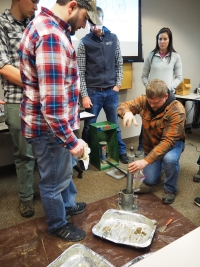
| 3. Develop Knowledge and Experience
|
|

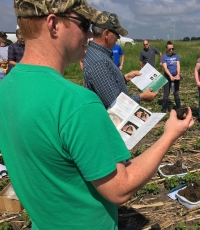
| 4. Demonstrate Competence
|

|

| 5. Complete the Technical Review
|
|

| 6. Receive and Accept the JAA Delegation
|

|

| After JAA is Delegated
Important Distinction: The IDP supports JAA development but does not grant JAA. JAA is granted only after competence is demonstrated, reviewed and formally delegated by NRCS. |
|
Video Resources
JAA Video for Managers: This video includes the history of JAA, describes how staff can obtain it, and explains why it is important for staff to have.
JAA Video for Employees: This video goes in depth on JAA levels, controlling factors, and process to obtain JAA.
JAA Guides
JAA Guide for Managers: This document outlines the Job Approval Authority process.
JAA Guide for Employees: This trifold guide describes what JAA is, explains how to obtain it, and discusses why it is important to have.
Frequently Asked Questions
Do you have more questions? Please contact us.
- What’s the best way to understand the purpose of Job Approval Authority (JAA)?
JAA is a component of a Technical Quality Assurance (TQA) system developed and administered by the NRCS to enable more people to provide reliable conservation technical assistance for federal conservation programs. Other components of an effective TQA system include conservation practice standards, accepted design methods and tools, training, peer review during the development of projects, as well as spot checks of project files and completed practices.
- What are the key requirements of JAA?
Conservation technical assistance training, experience, and demonstrated competence for the applicable conservation practice, job class, and stage of the practice. JAA also requires adherence to an ethics statement to only sign off on work for which the person with JAA is qualified.
- How and why does BWSR use JAA?
BWSR has adopted the NRCS JAA system and Professional Engineer (P.E.) licensure as part of its Technical Quality Assurance system for BWSR programs, as indicated in the BWSR Grants Administration Manual, Technical Quality Assurance section, Clean Water Fund Policy, and Erosion Control and Water Management Program Policy.
- How does Engineering JAA relate to the Minnesota statute that requires professional engineer licensure?
Minnesota Statutes Section 326.02, Subd. 3 requires P.E. licensure for the “practice of professional engineering”. The NRCS Engineering JAA chart (MN501 Authorizations) has defined the job classes of practices for which the scope or complexity is considered the practice of professional engineering, as indicated by an asterisk. Job classes of practices without an asterisk are not considered subject to the state professional engineering licensure requirement. Therefore, technicians can receive JAA for the job classes of engineering practices that do not have an asterisk. NRCS historically has coordinated with the Minnesota Board of Engineering, Architecture, Land Surveying, Landscape Architecture, Geoscience and Interior Design (AELSLAGID) regarding the JAA system.
- Are NRCS (federal) employees exempt from state professional engineer licensure requirements?
Yes, in accordance with Minnesota Statutes Section 326.13, clause (3), when working within the scope of their federal employment.
- Can an engineering technician work on a practice with a job class that is considered the practice of professional engineering?
Yes, if the work is done under the direct supervision of a qualified, licensed P.E., or an NRCS employee with the applicable JAA, who will oversee and sign off on the work.
- More generally, can a person without JAA for the job class and stage of a practice work on the practice?
Absolutely, if the work is done under the direct supervision of someone with the applicable JAA, who will oversee and sign off on the work. This type of on-the-job training is necessary to gain experience and demonstrated competence by a person wanting to achieve the corresponding JAA.
- Are people with Engineering JAA working under the P.E. license of the NRCS State Conservation Engineer?
The NRCS State Conservation Engineer is required by NRCS to be a licensed P.E. and to oversee the Engineering JAA system. The authority to approve engineering work can be delegated to others, in accordance with the JAA system, but only the P.E. can work under his/her license. Others can work under the direct supervision of a P.E., but not under the P.E.’s license. JAA is an assigned/delegated technical certification that enables people to provide and sign off on conservation technical assistance independent of direct supervision, if they are eligible and qualified. (However, peer review is always recommended.)